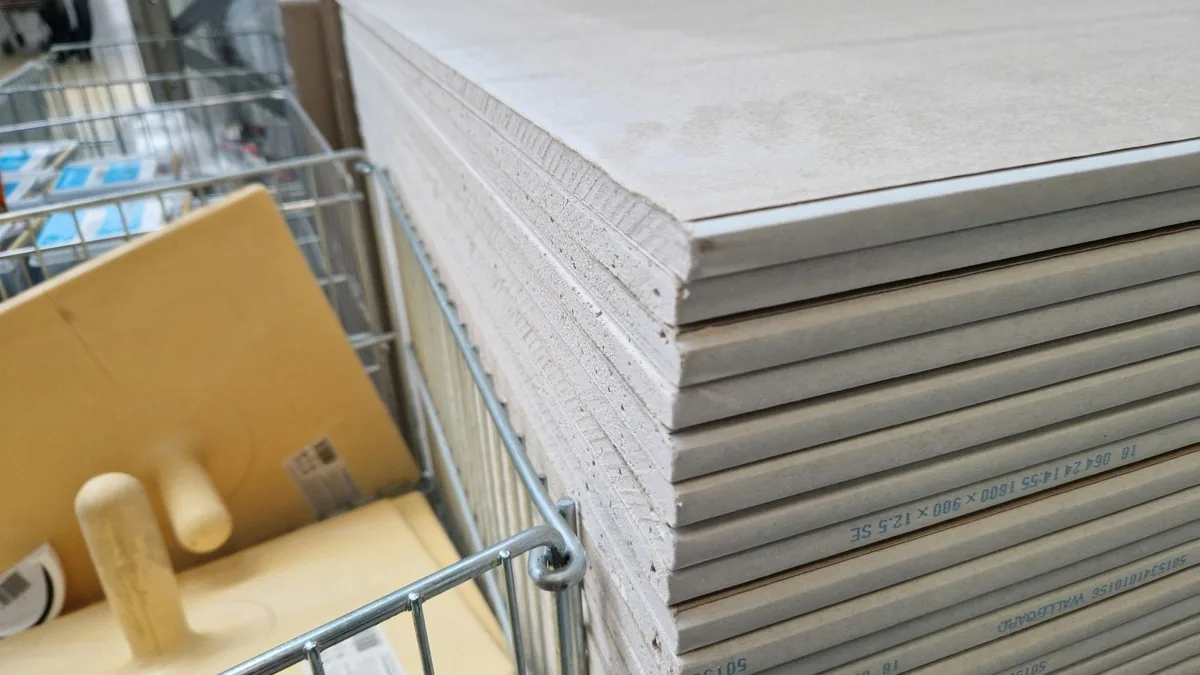
Understanding the Moisture Zones
Bathrooms have different levels of water exposure. The approach for each zone is different.
Wet areas: Inside showers and tub surrounds where water directly hits the wall. This is the splash zone. Regular drywall cannot go here, period. Even moisture-resistant drywall will fail here. You need cement board, Kerdi board, or similar tile backer.
Damp areas: Walls and ceilings near but not in the direct splash zone. Above the toilet, the vanity wall, the ceiling. These areas get humid and may see occasional splashes but not continuous water. Moisture-resistant drywall works here.
Dry areas: Parts of the bathroom far from water sources, if any exist in your layout. Regular drywall technically works but most people use moisture-resistant throughout for consistency.
Green Board
The traditional moisture-resistant drywall. It's green because the paper facing is treated to resist moisture absorption.
Green board handles humidity better than regular drywall. The paper won't absorb moisture as readily, so it's less likely to support mold growth or delaminate in humid conditions.
However, green board is not waterproof. It will still fail if it gets truly wet. Water intrusion through failed grout, a shower leak, or flooding will damage it just like regular drywall, just a bit slower.
Use green board on bathroom walls and ceilings that won't see direct water. It's appropriate for the back of the vanity, above the toilet, on the ceiling, and on walls adjacent to but not inside the shower or tub area.
Cost is slightly higher than regular drywall, maybe $2-3 more per sheet. Worth it for the added protection in a moisture-prone space.
Purple Board and Mold-Resistant Drywall
A step up from green board. Purple or other branded mold-resistant drywall has treated paper and often a treated gypsum core that actively resists mold growth.
The difference from green board: green board resists moisture absorption. Mold-resistant drywall actively inhibits mold even if moisture gets to it. It's a second line of defense.
I used purple board when I redid our bathroom ceiling after discovering the exhaust fan wasn't venting properly. That ceiling had seen years of humidity. Regular drywall would have been asking for mold problems. The purple board has been up three years with no issues.
Cost is higher than green board, sometimes $5-7 more per sheet. Whether that's worth it depends on your ventilation situation and how much humidity the space will see.
Cement Board and Tile Backers
For wet areas, you leave drywall behind entirely. The walls inside showers and tub surrounds need cement board or a similar tile backer.
Cement board is exactly what it sounds like: Portland cement with fiberglass mesh embedded. It's completely unaffected by water. You can soak it, spray it, leave it wet, and it doesn't care. Tile adheres well to it.
Brands like Durock, Hardiebacker, and Wonderboard are common. They all work. They install with cement board screws into studs, same general process as drywall but heavier and dustier to cut.
Alternative products like Kerdi board and GoBoard are foam-based and lighter. They work as both tile backer and waterproofing membrane. More expensive but faster to install.
Whatever you use, the joints need to be taped and waterproofed. Cement board itself is water-resistant but the seams aren't. Use mesh tape and thinset or a liquid membrane over joints before tiling.
Installation Considerations
Bathroom drywall installs basically like any other drywall, with a few additions:
Vapor Barriers
Some codes require vapor barriers behind bathroom drywall. This is typically plastic sheeting stapled to studs before drywall goes up. The barrier prevents moisture from getting into the wall cavity where it could cause hidden mold.
Check your local codes. Requirements vary by climate. Cold climates typically require vapor barriers on the warm side of walls. Hot, humid climates sometimes want them on the opposite side or not at all.
Sealing Penetrations
Anywhere pipes, vents, or fixtures penetrate the drywall is a potential moisture entry point. Use silicone caulk around shower valves, supply lines, and similar penetrations.
The gap where the tub or shower pan meets the drywall should be left open or caulked, not mudded. Movement between the tub and wall will crack joint compound. Caulk stays flexible.
Bottom Edge
Keep drywall off the floor by 1/2 inch in bathrooms. This prevents wicking if water pools on the floor. It's covered by baseboard anyway.
Behind toilets, the gap is especially important. Toilet base leaks happen, and you don't want the drywall sitting in that water.
The Ventilation Factor
Here's what I've learned: the type of drywall matters less than proper ventilation. A bathroom with great ventilation and regular drywall will outperform a bathroom with poor ventilation and mold-resistant drywall.
The exhaust fan is crucial. It should run during and after every shower, long enough to clear the humidity. Timer switches or humidity-sensing switches help ensure this happens.
The fan must actually vent outside. Our bathroom's original fan dumped into the attic, which is a code violation and a mold invitation. We ran new ductwork to an exterior vent, and the improvement in humidity control was dramatic.
Size the fan properly. CFM rating should match your bathroom size. Undersized fans run forever without clearing the air. Oversized fans are louder but work faster.
Even with perfect drywall choices, skimping on ventilation will eventually cause problems. Don't skimp.