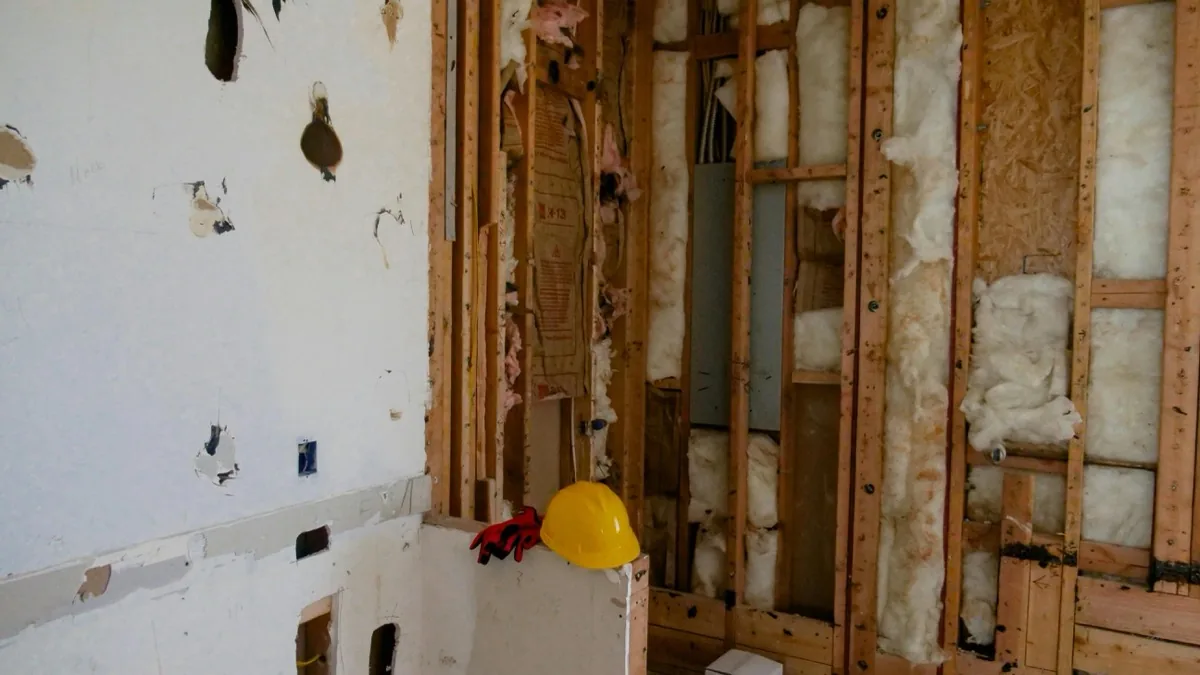
Understanding What You're Actually Dealing With
Not all holes are created equal. The size of your hole determines everything about how you fix it.
Tiny holes under half an inch, like from nails or small anchors, just need some spackle and you're done. Ten minutes, tops. Medium holes from half an inch to about two inches need either a mesh patch or some creative filling. Anything larger than that needs actual drywall material to fill it.
My neighbor Dave learned this the hard way. He tried to fill a fist-sized hole with about three tubes of caulk. I'm not joking. When I walked into his garage six months later, you could see where it had all shrunk back and cracked. He'd basically created a spider web pattern on his wall. Cost him $89 in caulk when a proper patch would have been maybe $15.
The Doorknob Hole Problem
Doorknob holes are probably the most common medium-to-large hole you'll encounter. They're usually between three and six inches, perfectly round, and located in the exact same spot every time someone opens a door too hard.
Uncle Frank, who spent 35 years as a contractor before retiring, always says doorknob holes are a sign of a missing door stop. Before you patch, buy a $3 door stop or you'll be patching the same spot again in six months. I've patched the guest bedroom hole three times before I finally listened to him.
Random Wall Damage
The other common scenario is irregular damage. Moving furniture, roughhousing kids, that time you tried to mount a TV and hit it with a hammer by accident. These holes are messier and harder to patch because the edges are often ragged.
My brother-in-law Jeff, during his failed house-flipping adventure, created a hole by falling through a ceiling while in the attic. The hole was shaped like his left leg. Ended up costing him $450 to have someone fix it because he gave up after three attempts. He'd tried the California patch method but cut his patch piece way too small.
The California Patch Method
This is my go-to for holes between three and six inches. The California patch, also called a hot patch or butterfly patch, is genius because it doesn't require any backing support. You're basically creating your own backing board attached to the patch piece itself.
I was skeptical the first time Pete explained it. How could a piece of drywall bigger than the hole support itself? But it works. And once you get the technique down, you can knock out a patch in about 30 minutes plus drying time.
What You Need
Here's your supply list. This ran me about $23 last time I stocked up:
- A scrap of drywall (buy a small piece if you don't have any, usually around $6)
- Utility knife
- Pencil
- Joint compound (not spackle, actual joint compound)
- 6-inch drywall knife
- Sandpaper, 120 grit
- Primer and paint for finishing
Do not use spackle for anything bigger than a nail hole. I cannot stress this enough. Joint compound is designed to be applied in thin layers and sanded smooth. Spackle is designed for tiny imperfections. Mixing them up was my original sin.
Step-by-Step California Patch
First, cut your patch piece. It needs to be about two inches larger than the hole in every direction. So a four-inch hole needs an eight-inch square patch piece. Cut it from your scrap drywall.
Flip the patch over so you're looking at the paper backing. Using your utility knife and a straightedge, score the drywall about one inch from each edge, all the way around. Don't cut through the front paper. Just the gypsum and back paper.
Now snap off those outer edges, but leave the front paper attached. You should end up with a smaller drywall square surrounded by a paper border. That paper border is your genius self-adhering backing.
Hold your patch over the hole and trace around the actual drywall center (not the paper border) onto the wall. Cut out that traced square from your wall. Make it clean. A jagged cut makes everything harder.
Spread a thin layer of joint compound around the hole on the wall. Stick your patch in there, pressing the paper border flat against the surrounding wall. It should fit snugly with minimal gaps.
Apply joint compound over the whole thing, feathering the edges out several inches. Let it dry completely. Apply a second coat, feathering wider. Maybe a third if you need it. Sand between coats.
The Backing Board Method
For holes bigger than six inches or oddly shaped holes, you need a backing board. This is a piece of wood or drywall that sits behind the hole and gives your patch something to attach to.
My friend Carlos, who paints houses professionally, taught me a trick that changed everything. He uses a piece of scrap drywall instead of wood as his backing board because it expands and contracts the same way as the surrounding wall. Wood can cause cracks over time, especially in humid climates. Learned that after patching my bathroom wall twice with a wood backing that kept cracking.
Installing the Backing
Cut your backing board several inches longer than the hole in one direction, but narrow enough to fit through the hole when turned sideways. For a six-inch hole, I'd use something like a 10-inch by 4-inch strip.
Drill a screw partway into the center of the backing board. This gives you something to hold onto. Slide the board through the hole, rotate it so it's behind the wall, and pull it snug against the back of the drywall while you drive screws through the wall into the board. Two screws usually does it.
Remove the center holding screw, and you've got a solid backing to attach your patch to.
Cutting and Installing the Patch
Here's where most people mess up. Your patch piece needs to be cut to fit the hole almost perfectly. Small gaps are okay because joint compound fills them. But if your patch is too small and falls through, you're starting over.
I keep a rasp nearby. It lets me shave down the edges of my patch until it fits just right. Uncle Frank laughed at me when I showed him this. He just scores it perfect the first time. I don't have 35 years of experience, so I use the rasp.
Screw the patch into the backing board. Sink the screws slightly below the surface but don't break through the paper. Three or four screws is plenty. Then it's joint compound time again, same as the California patch. Multiple thin coats, feather the edges, sand smooth.
The Biggest Mistakes I've Made
Over 15 years, I've screwed up almost every possible way. Here's what I wish someone had told me.
Rushing the Dry Time
Joint compound needs to dry. Fully dry. I'm talking 24 hours minimum between coats, longer in humid weather. I once tried to sand a patch after six hours because I had guests coming over. Tore the whole thing up. Gouged lines right through the still-soft compound. Had to scrape it all off and start over.
Sarah still brings this up. "Remember when you tried to fix the dining room wall before Thanksgiving?" Yes, Sarah. I remember.
Not Feathering Wide Enough
If your patch is four inches, your feathered edge of joint compound should extend at least six to eight inches beyond it in every direction. The wider you feather, the more invisible the repair. Most beginners (me included, for years) feather way too tight and end up with a visible bump.
Dave's garage wall I mentioned earlier? Even if he'd used the right materials, he feathered about half an inch beyond the patch. You can see that repair from across the room.
Skipping Primer
Joint compound absorbs paint differently than your existing wall. If you paint directly over the patch without priming first, you get a dull spot that's visible in certain light. Pete calls it "flashing" and it's obvious.
I skipped primer on my very first repair and then spent three coats of paint trying to make the sheen match. Never worked. Ended up priming and painting the whole wall. Would have taken 10 minutes to prime just the patch first.
When to Call a Professional
I'm a big DIY guy. But some repairs are beyond what most homeowners should attempt.
If your hole reveals plumbing or electrical, stop. Don't guess what's behind there. My cousin tried to patch a hole and accidentally drove a screw into a copper pipe. $600 plumber visit on a Sunday.
If the damage covers more than a couple square feet, the time and materials add up fast. At some point, hiring a drywall guy for $150-200 makes more sense than spending your entire Saturday making it worse.
If the hole is in a textured ceiling, especially popcorn texture from before 1980, call someone. Old popcorn texture might contain asbestos. Not worth the risk. We had ours tested before any ceiling work on our house, cost about $40 but the peace of mind was worth it.
What I'd Tell a First-Timer
Start with the California patch method. Buy a small piece of drywall, practice on it before touching your actual wall. Make the cuts, learn how the paper peels, get a feel for how joint compound spreads.
Budget about $30 for materials and $2 or so for supplies you'll use up. Your first patch will take a couple hours including dry time between coats. By your third or fourth repair, you'll be doing them in under an hour of active work.
And buy a door stop. Seriously. Twelve years of patching the same hole behind the guest bedroom door before I finally spent $3 on a little rubber bumper. Twelve years. Don't be me.