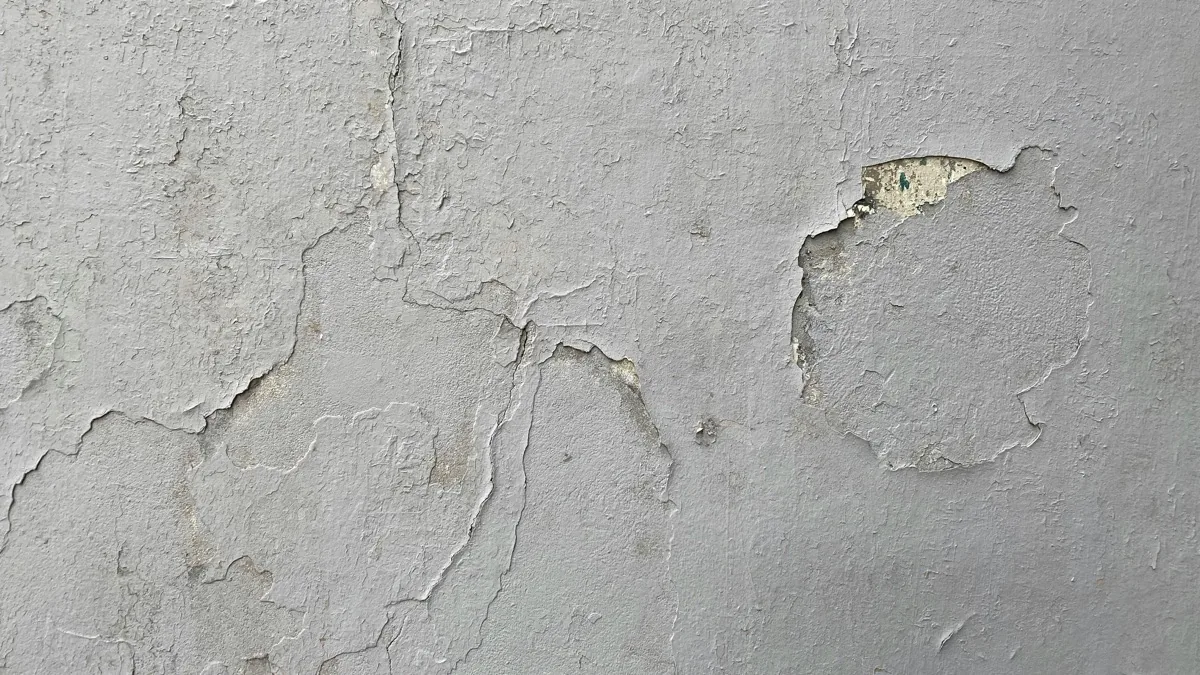
What Skip Trowel Texture Is
Skip trowel is a hand-applied texture where a trowel loaded with joint compound is dragged across the wall in a way that intentionally skips and lifts, leaving irregular deposits of mud.
The result is organic patterns of raised texture with areas of smooth wall showing between. Similar in concept to knockdown but with different shapes because it's hand-applied rather than sprayed.
Popular in Mediterranean, Tuscan, and Southwest style homes. It's a premium finish because it requires skilled hand work, unlike spray textures which can be done by machine.
Tools and Materials
Basic skip trowel requires:
Curved pool trowel: The standard tool for skip trowel. The curved blade creates the skip action naturally. Sizes vary, 12-16 inches common.
Flat trowel: For knockdown of peaks if desired. Some skip trowel is left with peaks, some is flattened after application.
Hawk: Holds mud in your off hand while applying. Essential for efficient work.
Joint compound: All-purpose, mixed slightly thicker than for flat work. Should hold peaks when applied.
Mixing the Compound
Compound for skip trowel should be stiffer than for taping or skim coating. When you pull the trowel through, the mud should hold peaks rather than settling flat.
Start with all-purpose compound. Add water sparingly if it's too stiff to work. But err on the thicker side. Thin compound won't create the raised texture pattern.
Work in smaller batches. The compound sets up in the bucket as you work. Fresh batches ensure consistent workability.
Application Technique
Load mud onto your hawk. Scoop some onto the curved edge of your trowel.
Approach the wall at a low angle. Press the loaded edge against the surface and drag. The key is varying pressure: press to deposit mud, lift to skip, press again. The curve of the trowel naturally creates this skip action as you work.
Change directions frequently. Horizontal, vertical, diagonal, curves. The randomness is what makes skip trowel look organic rather than mechanical.
Overlap passes slightly. Don't leave hard edges between applications. Blend as you go.
Step back frequently. It's easy to get lost in close-up work. Step back to see the overall pattern developing.
Pattern Variations
Skip trowel isn't one texture. Variations in technique create different looks:
Light skip: Less mud, more wall showing between deposits. Subtle effect.
Heavy skip: More mud, larger deposits, more dramatic pattern.
Knocked down skip: After applying, wait for slight set, then knock down peaks with a flat trowel. Combines skip trowel pattern with flat-topped knockdown finish.
Spanish or Santa Fe: Very heavy application with dramatic peaks. Often left without knockdown.
The variation in my friend's house is medium-heavy with light knockdown. Took us several test panels to match it.
Tips for Natural Looking Results
What I learned getting this to look right:
Random means random. If you always drag left to right, it shows. Mix up direction, pressure, trowel angle. Let your wrist relax and move naturally.
Don't overwork. Each area should be touched once or twice, not refined repeatedly. Overworking creates muddy, indistinct patterns.
Watch the edges. Where new mud meets existing mud, blend carefully. Hard edges between applications are visible.
Work in good lighting. You need to see what you're creating as you go. Strong work light at an angle shows the texture development.
Accept imperfection. Skip trowel is supposed to look handmade. Minor inconsistencies add to the organic feel.
Matching Existing Skip Trowel
The hardest situation. Skip trowel patterns are unique to the person who applied them. Matching is challenging.
Study the existing texture. How heavy? What direction tendencies? Knocked down or peaked?
Practice on scrap until you can get close. It won't be identical but should be compatible.
Blend into existing. Don't create a hard edge between old and new. Feather the new texture into the existing, even if it means going slightly onto areas you're not patching.
Perfect matching might be impossible. Sometimes the best approach is retexturing a larger area so the new pattern is consistent across a whole wall.